The Side of Chronic Illness We Don’t Talk About Enough- Mental Health
The Hidden Psychological Toll of Chronic Illness and Medical Gaslighting
© Ainsley DS Photography
There are parts of chronic illness the people close to us can see- the appointments, the medications, the fatigue, the flare-ups.
There are parts that get talked about often - managing pain, pacing yourself, what to do during a flare, which supplements might help, which specialist to see.
But there’s a huge part of chronic illness that remains mostly invisible.
And that’s what it does to our mental health.
Chronic illness doesn’t just affect the body. It seeps into identity, relationships, finances, self-worth, and hope for the future. Our mental health isn’t separate from our physical health, in fact the two are deeply intertwined, constantly influencing one another. When one suffers, the other almost always follows.
That’s why it surprises me how often this topic gets skimmed over, even in chronic illness spaces. We warn people about side effects of medications, but not about the emotional side effects of living in a body that doesn’t cooperate. We prepare people for flare-ups, but not for grief. For fatigue, but not for isolation. For pain, but not for the quiet thoughts that can creep in at 2am.
The truth is: most people diagnosed with a chronic illness will face significant mental health challenges alongside their physical symptoms. And yet very few of us were ever told to expect that, let alone given the tools to navigate it.
It’s time we talk about that part too.
Here are a few big, complicated feelings, emotions, and challenges someone dealing with a chronic illness may face.
The Loneliness No One Warns You About When You Stay Chronically Ill

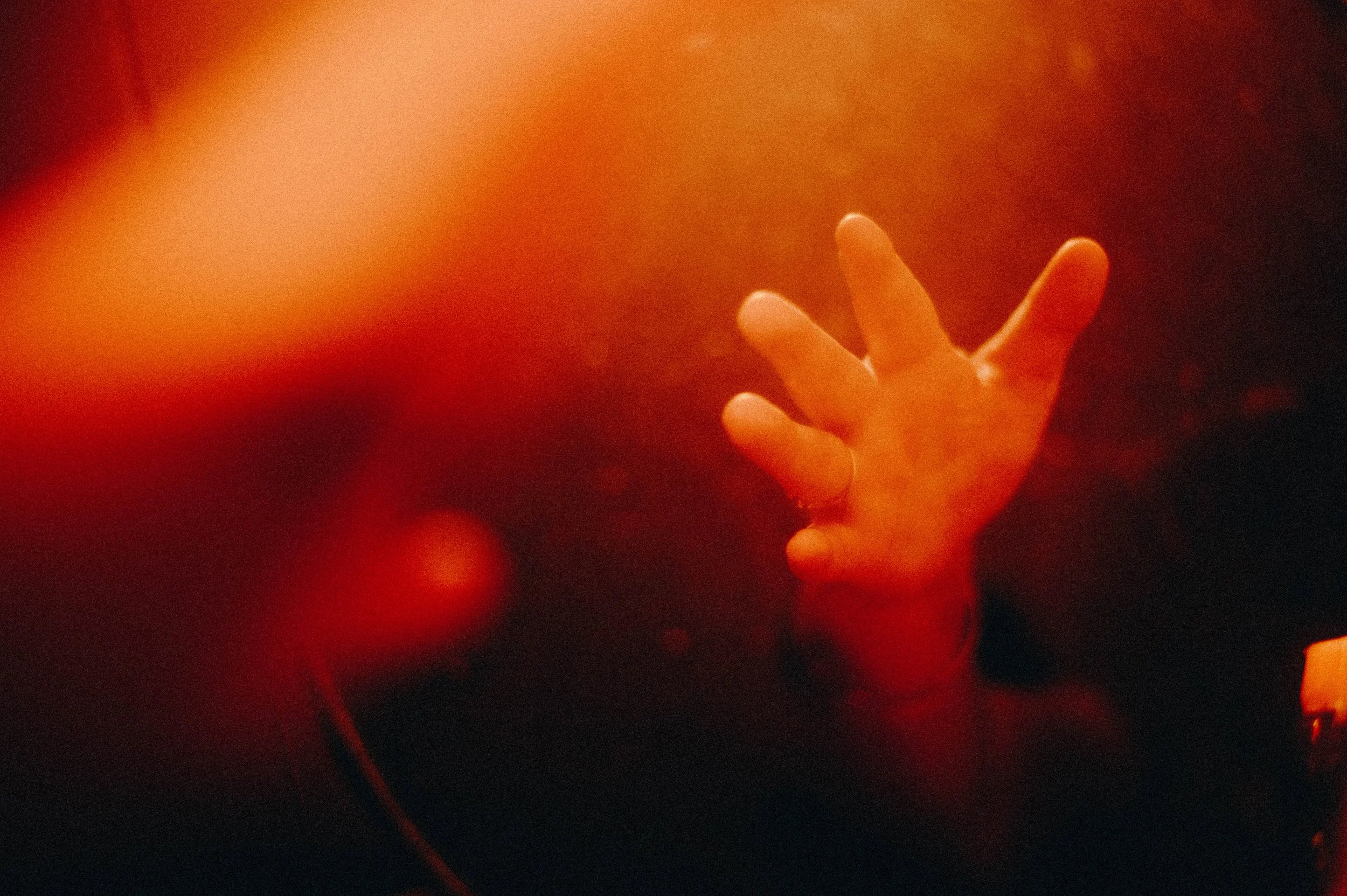
Living with a chronic illness can make you feel incredibly alone. © Ainsley DS Photography
Chronic illness can be deeply isolating.
When leaving the house takes enormous effort, when plans depend on how your body behaves that day, when cancellations become inevitable, your world can get smaller. Friends may try at first, but eventually you become too ‘flaky’, unreliable, or difficult to make plans with and many of those friends can eventually disappear.
And one day you look around and realize your social circle has quietly, significantly, shrunk.
Not because you stopped caring or because you didn’t try…
Not because you didn’t want to spend time with them…
But because your body changed the rules. It would not cooperate.
And it can be heartbreaking to miss yet another social event, stuck at home alone.
This feeling of loneliness and isolation can be easy to ignore when we are in our worst flares and stuck in survival mode. Ironically it’s when we begin to feel better and want to ease our way back into the world when we realize just how far we have been left behind while the world has continued on without us. We feel forgotten, alone, and unimportant.
It can be brutal.
Chronic Illness Can Make You Feel Worthless/ Useless/ A Garbage Human Being.

When you used to live a full, happy life it can be hard to accept things have changed © Ainsley DS Photography
“I feel like such a pathetic loser” were the exact words I spoke to my partner only a few days ago after having to cancel yet another plan with a friend who is doing fabulous things with their life.
For so many of us, worth has been quietly tied to productivity for most of our lives. We’re praised for achieving, earning, advancing, and building. So when illness disrupts our ability to produce- to earn, learn, to hustle, to “move forward” and you can’t work the way you used to, contribute to your household the way you want to, and you rely on others for financial, physical, emotional support, it can feel like our value disappears too..
Finances are especially loaded. Money isn’t just money. It represents safety. Independence. Choice. The ability to say yes to dinner with friends, to book a weekend away, to replace something when it breaks without panic. It represents freedom.
When you can’t earn your own income, it can feel like all of that gets stripped away at once.
You may find yourself dependent on a partner, family, or government support. You may feel like you’re no longer “earning your keep.” You’re not climbing the career ladder. You’re not building savings. You’re not contributing in the way society has told you matters most. Your prime-minister even called you a “bottom feeder”.
And that can sting in a way that’s hard to explain. Especially when you watch the people around you achieve their dreams and advance their lives while you’re stuck attempting to get through another week. You are happy for them of course, but there is just a touch of hurt wondering if you will ever be well enough to achieve your own dreams.
There’s also an ache in wanting to help others, financially, practically, generously, and feeling like you can’t. In knowing you have skills, ambition, intelligence, and drive that could help people… but a body that limits how much of that you can express.
It’s easy for your brain to twist that into:
“I’m useless.”
“I’m not contributing.”
“I don’t matter.”
Even though none of that is true.
In a world that worships output, separating productivity from worth is incredibly hard.
Grief for the Person You Used to Be

When you go from climbing volcanos to not being able to make it out of bed it’s normal to feel a deep sense of grief for the old you. © Ainsley DS Photography
Chronic illness brings a kind of grief that doesn’t always get recognised.
Grief for the old version of you.
For dancing.
For late nights.
For spontaneous trips.
For the career you were building.
For the ambitions that you had to let go of.
It can feel like you are mourning yourself, while still being alive.
Medical Trauma, Shame, Fear & Anxiety
Chronic illness isn’t just about symptoms. It’s navigating a system that can feel dismissive, slow, expensive, and exhausting. Over time, the pattern can look like this:
Illness → medical trauma → isolation → depression → worse symptoms → more illness.
You start bracing for the next flare, the next bill, the next appointment where you may not be heard. It can create a heavy, “why is this always happening to me?” feeling, not because you want to be a victim, but because you’re constantly worn down by battles you didn’t choose. Small things feel bigger because your resilience is low.
Appointments themselves become huge stress triggers. Racing heart in the waiting room. Rehearsing your words. Preparing for the pain and invasiveness of yet another test. Bringing symptom logs like evidence in a court case. Trying to appear credible, but not too credible that you get accused of being a “Google Doctor”, not too emotional so that you are hysterical, not too calm so that they think you’re actually fine. And sometimes, despite all that effort, you still leave feeling dismissed with no answers.
When you’re repeatedly told it’s “normal,” “stress,” or “just anxiety,” while your lived experience says otherwise, it erodes trust. Not just in doctors, in yourself. You start second-guessing your own body. “Maybe I really am a hypochondriac?”
That kind of medical gaslighting leaves a mark. When both your body and the systems meant to help you feel unsafe, your nervous system learns to stay on guard. And so you carry the anxiety, the shame, and the fear, often quietly, because you think people are sick of hearing about it (you're certainly sick of experiencing it) and you don’t want to be “the sick one”, "the dramatic one.” You feel embarrassed by your misfortune so you try to just push it all deep down. Unfortunately, that doesn't work.

There is a lot that comes with chronic illness that can add stress and anxiety to an already struggling mind. © Ainsley DS Photography
Feeling Like a Burden
This one is tough.
Being an independent person needing help- financially, socially, physically, emotionally, while also being aware of the impact on your loved ones can feel excruciating.
It’s impossible not to see their exhaustion, worry, strain that it puts on their life. You see them constantly going out of their way to help you.
You feel guilty, lazy, like you are a problem to be solved.
And your brain sometimes whispers, “They’d be better off without me.”
Which brings us to something that isn’t talked about nearly enough.
Chronic Illness and Suicidal Thoughts

Struggling with suicidal thoughts is common for people living with chronic illness and pain, but it doesn’t have to be. © Ainsley DS Photography
Chronic illness has a very real, well-documented relationship with suicidal thinking.
When your body is in constant pain, when your future feels uncertain, when you’re exhausted beyond language, thoughts like:
“What’s the point of being alive in a body that only holds pain?”
“My loved ones would be better off without me.”
“I can’t do this anymore.”
can creep in slowly.
And this isn’t rare.
Research consistently shows that people living with chronic illness are at significantly higher risk of suicidal thoughts and behaviours than the general population. Studies estimate that around 30–50% of people with chronic pain report suicidal ideation at some point in their lives and people who live with chronic pain with two to three times greater odds of lifetime suicidal thinking and behaviour compared with people without chronic pain, even when accounting for other mental health conditions. Certain conditions carry even higher risk, for example, people living with autoimmune disease, neurological disorders, endometriosis, and fibromyalgia have been shown to have markedly elevated rates of depression and suicidal thinking compared to healthy populations.
Chronic pain alone increases suicide risk several-fold. Add in medical trauma, financial stress, social isolation, disability discrimination, and loss of identity, and it becomes clear that this is not a personal failing. It is a public health issue.
These thoughts often don’t arrive dramatically. They don’t always look like an immediate crisis. Sometimes they build quietly in the background, like a low hum of hopelessness. A growing sense of being trapped. A growing belief that the pain will never improve and the burden you feel you’ve become will only grow heavier.
And when those thoughts aren’t acknowledged, or when they’re met with silence or shame, they can grow louder to the point they’re no longer ignorable.
If this is something you’ve experienced, you are not broken. You are not weak. You are not attention-seeking. You are having a very human response to prolonged, unrelenting suffering.
Pain- especially pain without a clear endpoint, literally changes the brain. Long-term stress reshapes thought patterns. Hopelessness is not a moral flaw; it’s a nervous system that has been under strain for too long.
You are not alone in that experience, even if it feels isolating. You do not have to carry those thoughts by yourself. And amazingly, you can rewire the brain to feel safe again.
If you’re in Aotearoa and ever feel like it’s too much, are overwhelmed, or at risk, you can call or text 1737 at any time to speak to a trained counsellor for free or check out this article about where to find other mental health help in NZ . If you’re in immediate danger, call 111. There are people who want you here. There are people trained to sit with you in that darkness until it feels even slightly lighter.
Suicidal thoughts are a sign that something needs more support, not that you are beyond help.
And even if your body feels like it’s fighting you, your life still has weight. Still has an impact. Still has meaning.
I am living proof of that.
Anger and Injustice
Anger and a sense of injustice about your position is perfectly valid. In a world where billionaires live it up easily, where the most powerful predators walk free, where some people can afford to buy their way out of chronic illness and disability, where politicians making hundreds of thousands of dollars a year cut aid to ill and disabled people, it can all feel more than a little unfair.
The question becomes- what do we do with all of this?
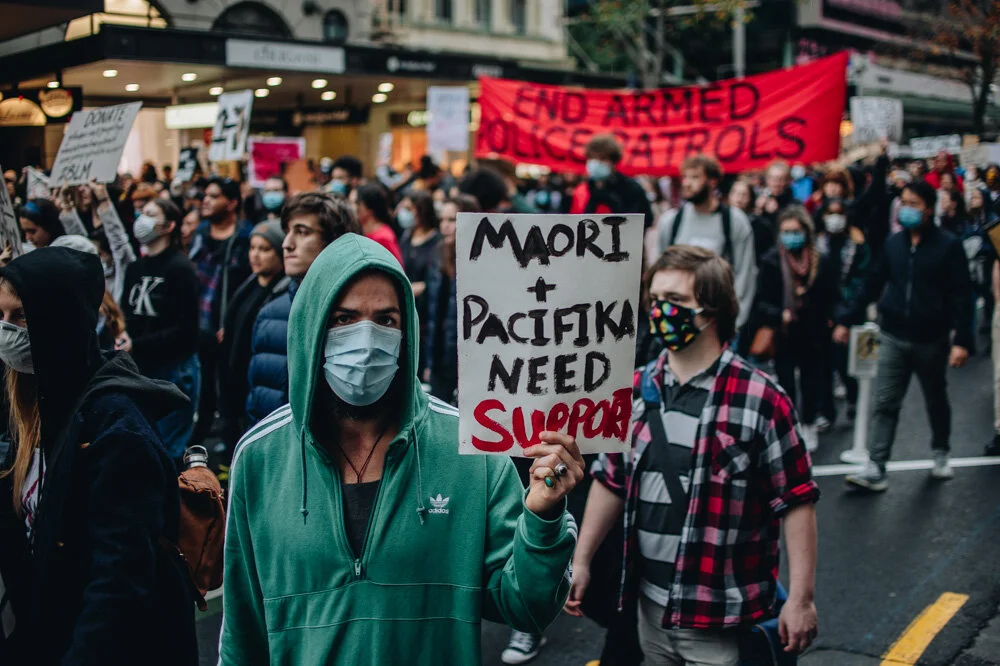
Turning anger, frustration pain into power with the Black Lives Matter Protests. © Ainsley DS Photography
How We Begin to Combat Difficult Feelings That Come With Chronic Illness
Unfortunately none of these are overnight solutions, but small steps that can eventually help in big ways.
1. Talk. Early. Honestly.
Talk to someone. A friend. A partner. A counselor. A therapist. A support worker. Maybe even share your story on social media.
Naming the feelings takes away some of their power. Then you can begin to work on them, you might even find others out there who are just like you.
Share your worries. Let your loved ones remind you why you matter. Let them tell you the things your illness-distorted brain refuses to believe. Even if it feels embarrassing, even if it feels dramatic. Let those feelings out so that you can start to fix them.
2. Give It a Day
It sounds silly, but sometimes the most radical thing you can do is go to bed.
There are days when everything feels unbearable, and then you wake up the next day and it’s 5% lighter.
5% is enough to keep going.
And who knows, maybe the day after that you will feel another 5% better?
Remember that your worst days are just that- your worst days. Don’t make any decisions on your worst days. Just give it another day. Go to bed, sleep. See how you feel tomorrow.

Sometimes the best thing you can do is go to bed. © Ainsley DS Photography
3. Find an Accessible Community
It can be hard as hell to make and maintain friendships as an adult even when you don’t have a chronic illness. But when your energy is unpredictable, your plans are tentative, and your body sometimes makes decisions for you, it adds another layer most people don’t have to deal with.
Cancellations can feel loaded with guilt. Explaining your symptoms can feel awkward. You might worry you’re unreliable. Or “too much.” Or not enough.
That’s why finding people who already get it can be life-changing.
Disabled and chronically ill communities (online or in person) offer something the medical industry struggles to: recognition, acceptance, comfort.
The relief of not having to justify your pain. The comfort of someone saying, “Oh yep, flare day,” instead of “But you looked fine yesterday.”
When you’re surrounded by people who understand cancellations, fatigue, pain, mobility aids, medical devices, and pacing, without explanation, it instantly feels easier, and you feel less alone with your illness. One of the greatest parts about my endometriosis empowerment shoots is seeing and feeling the way the people with endo instantly connect with each other over such life changing and harrowing experiences. We compared surgeries, gossiped about specialists, shared advice, and were able to provide a compassionate ear to someone who can truly empathise with your pain.
And all of a sudden…
You stop feeling like the “difficult” one.
You stop feeling abnormal.
You start feeling… understood.
And this kind of belonging heals things medicine cannot.
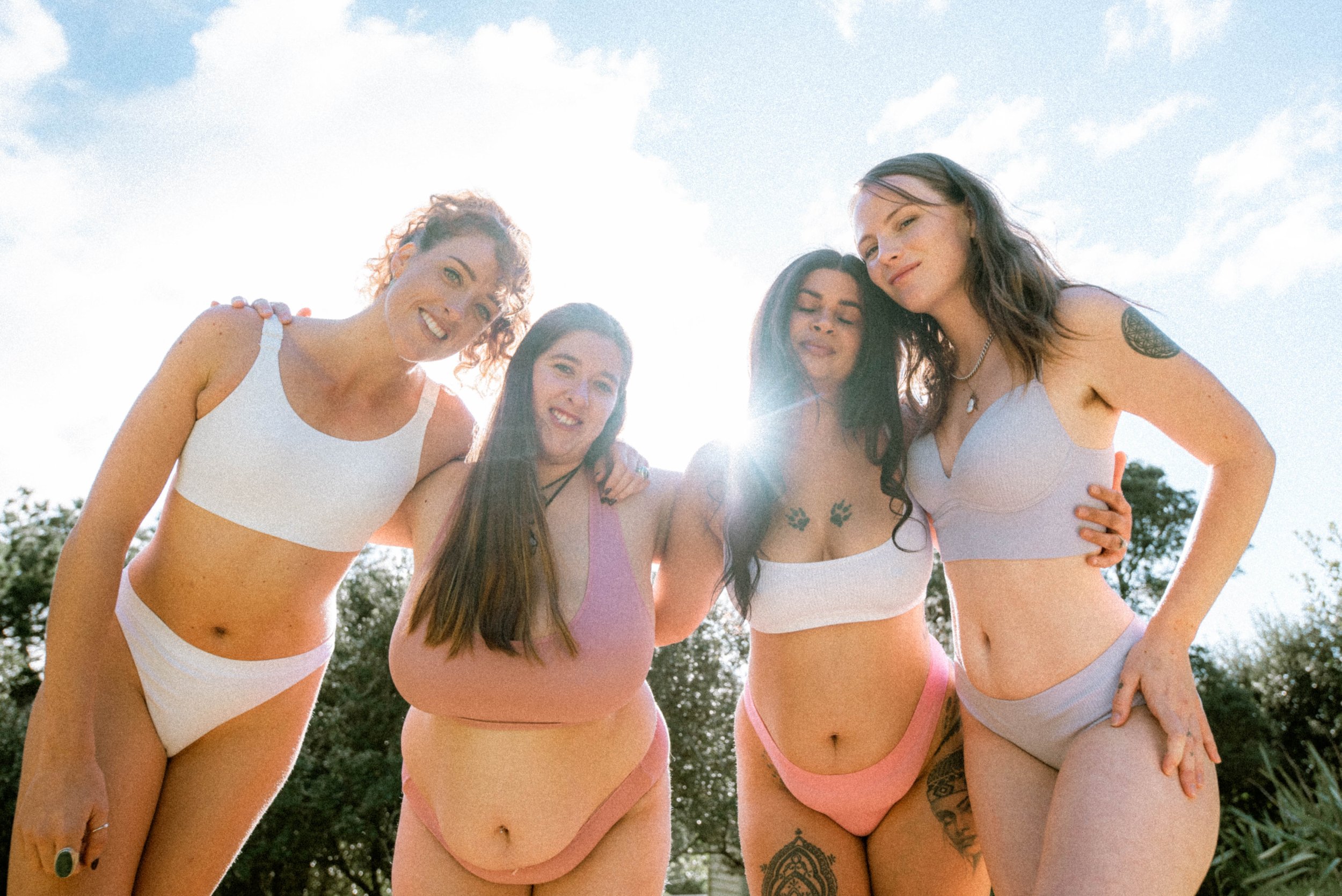
An understanding community can make all of the difference © Ainsley DS Photography
How to Find Disability and Chronic Illness Communities
If you’re not sure where to start, here are some practical ways to find your people:
1. Search condition-specific groups.
Many chronic illnesses have dedicated Facebook groups, Reddit communities, Discord servers, or nonprofit organisations. Search your condition + “New Zealand” (or your country) + “support group” or “advocacy.” Online communities can be incredibly accessible. You can participate from bed. You can read quietly before posting. You can leave when you’re overwhelmed. For many people, this is the safest starting point.
2. Look for local disability organisations.
Most regions have disability resource centres or advocacy organisations that run peer support groups, workshops, or social events. In Aotearoa, you can search through local disability support services, community centres, or council websites. I highly recommend The D-List in Tamaki, Auckland as an accessible, fun and friendly disability organisation that does real world events as well as an online platform.
3. Ask your healthcare providers.
Some GP practices, pain clinics, and specialist services keep lists of peer support groups, especially for chronic pain, autoimmune disease, neurological conditions, or endometriosis.
4. Check social media intentionally.
Instagram and TikTok have vibrant disabled creator communities. Follow hashtags related to your condition or disability justice. Comment. Engage. Over time, that can turn into genuine connection.
5. Disability rights and advocacy groups.
If you’re someone who processes anger or injustice through action, advocacy groups can be powerful spaces to meet others who share your lived experience. Even attending one online meeting can shift your sense of isolation.
4. Turn Chronic Illness Pain and Suffering Into Something
Art therapy isn’t about being “good.” It’s about giving your nervous system somewhere safe to put what it’s holding.
When you’re living with chronic illness, so much gets swallowed — frustration, grief, anger, fear, boredom, envy, hope. If it stays contained, it can harden. It can loop in your thoughts. It can turn into self-blame.
Creative expression interrupts that loop and gives those feelings somewhere to go.
Draw badly. Paint with your fingers. Tear up magazines and make a chaotic collage. Write the angry version, not the polite one. Sing in the car. Photograph the parts of your life that feel invisible. Make something messy and raw and honest.
You don’t have to show anyone, explain it, monetize it or make it productive.
This isn’t content. It’s release.
When emotion moves through your hands, your voice, your body, it shifts from being trapped inside you to existing outside of you. You can look at it. You can create shape around something that once felt shapeless.
Pain that has nowhere to go turns inward.
Pain that is expressed becomes story, colour, sound, image.
And sometimes, that small act of creation is the difference between imploding and exhaling.

Turning your pain into purpose with art can feel rewarding © Ainsley DS Photography
5. Make a Plan To Do Just One Thing
When everything feels chaotic, overwhelming and you feel stuck, choose one small action.
For example, if you are feeling angry and frustrated about how disabled people are treated you could…
- Research a local disability rights group.
- Sign a petition.
- Share a resource.
- Attend one meeting, (even online).
A single action can restore a sense of agency and make you feel like you are doing something about the problem you are grappling with. It helps you feel less helpless.
6. Reframe the Capitalist Mindset
Capitalism measures output. We feel that our worth is tied into our productivity, our money making ability, our ability to contribute to society in a way that is deemed “normal”.
Human worth however is measured in presence, kindness, creativity, resilience, perspective, love.
You are still valuable even if you are not “productive”.
Look at other measure of value that you contribute to. For example…
When you comfort a friend through a hard moment.
When you advocate for better healthcare.
When you create art from your pain.
When you share your story and help someone feel less alone.
When you survive another hard week.
You are adding value to your own life, and also to the lives of others.
Those things don’t show up on a payslip. They don’t increase GDP. But they matter.
Chronic illness often forces you to unlearn the lie that busyness equals worth.
What remains is your character. Your empathy. Your depth. Your perspective. Your capacity to love and be loved.
If your body has changed the terms of how you participate in the world, that does not make you less of a person. It means you are participating differently.
And different does not mean lesser.
You are still valuable in the quiet.
You are still contributing in invisible ways.
You are still worthy, even on days when the only thing you accomplished was getting through it.
That counts.
More than this system will ever admit.
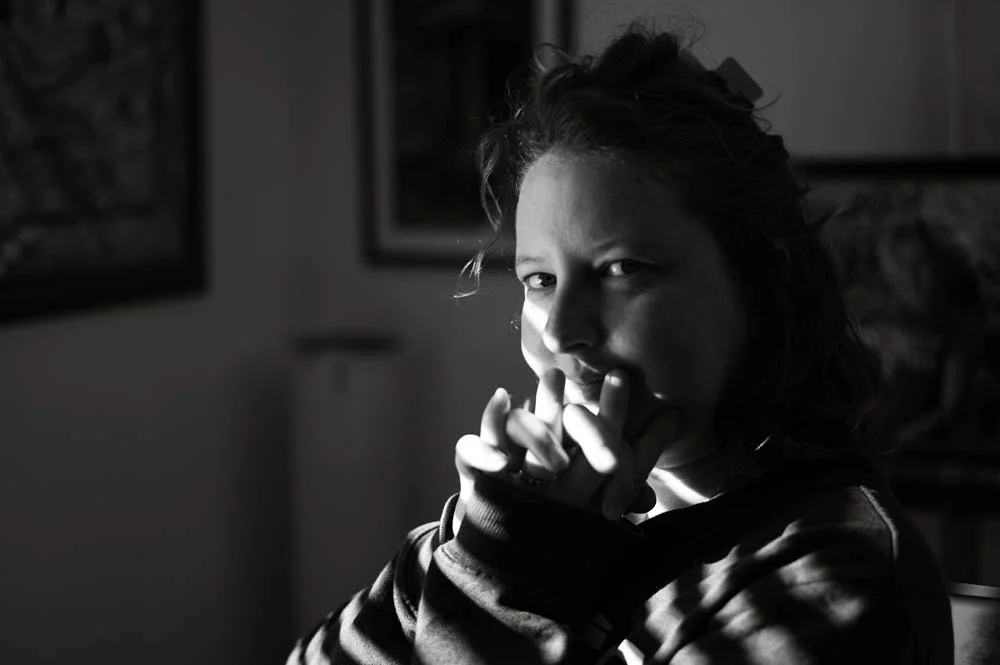
Your people will love you just as you are. An image of me one slow morning in my messy office taken by my husband.
7. You Are Not a Burden. Losing Independence — and the Myth of “Doing It Alone”
One of the most painful parts of chronic illness is losing independence.
Needing help with money. Rides to appointments. Housework. Paperwork. Basic daily tasks.
If you were once the capable one- the helper, the organiser, the strong one- this shift can feel humiliating. Modern culture worships independence. We’re taught that adulthood means self-sufficiency. That strength means not needing anyone. That success means standing entirely on your own.
So when illness forces you to lean on others, it can feel like failure. Like you’re a burden.
But history tells a different story.
In ancient Egypt and many other old societies, society wasn’t built on isolated individuals grinding alone. It was built on interdependence. Families lived in extended households. Work was communal. Resources were shared. Archaeological evidence shows that people who had significant injuries or disabilities lived for years after those injuries (including the famous King Tutankhamun), which means someone fed them, housed them, protected them. They were not discarded. They were cared for.
Human survival has always depended on mutual support.
The idea that you must be fully independent to be worthy is modern. Industrial. Capitalist. It is not historically accurate. It is not universal. And it is not a moral truth.
There are seasons in life when you carry others.
And seasons when you are carried.
Chronic illness may mean your “being carried” season is longer than you expected, but that does not make you less valuable. It makes you human.
You are not a burden.
You are participating in the oldest survival system we have: care.
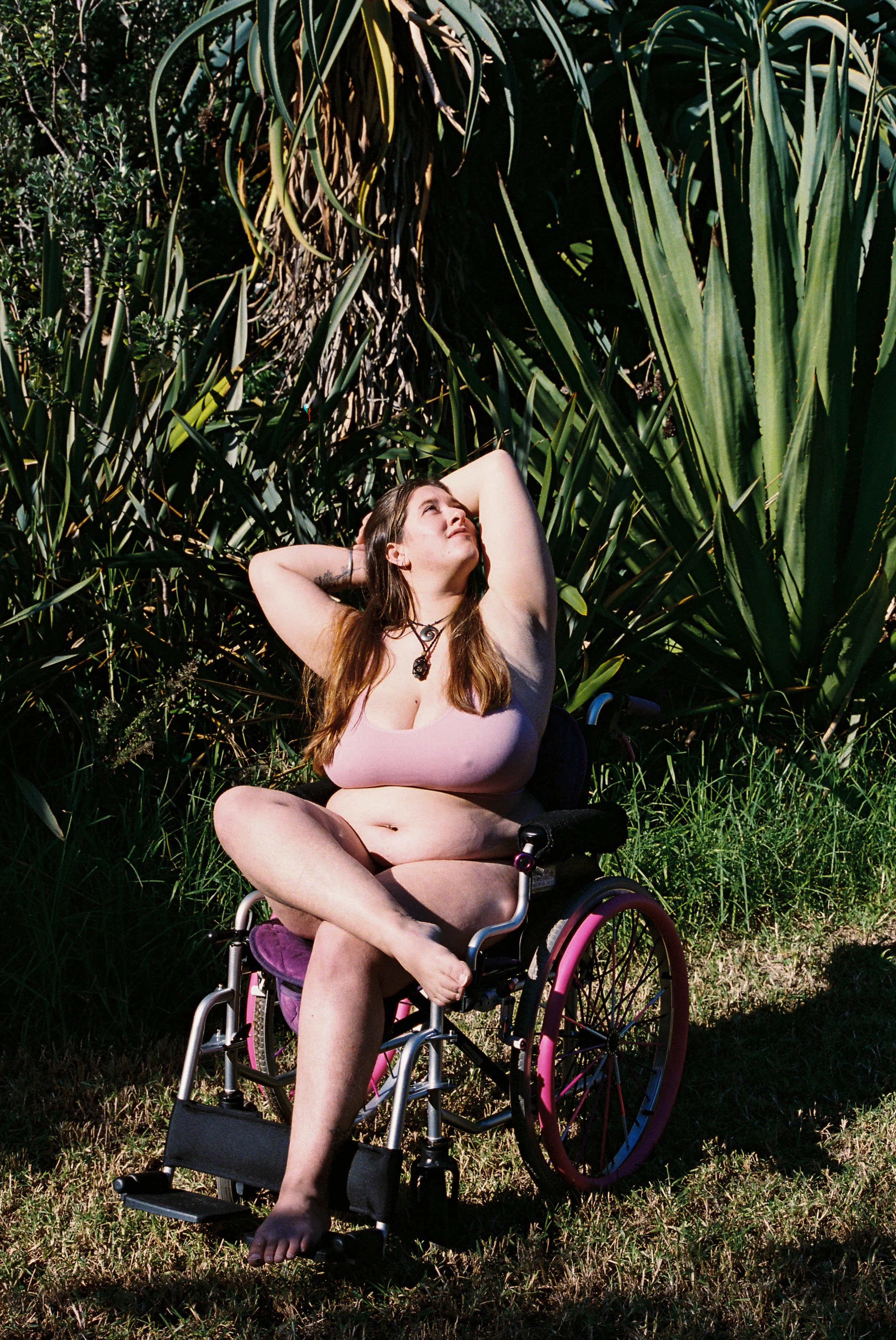
Who said we had to do it all alone anyway?
And Here’s the Hopeful Part
Chronic illness can take a lot from you.
It can shrink your world — and then, slowly, it can rebuild it in a different shape.
The friendships that remain often become deeper.
The empathy you develop becomes profound.
The resilience you grow is something most people will never understand.
You are not weak for struggling.
You are not dramatic for grieving.
You are not selfish for needing support.
You are adapting to something incredibly hard.
It might not look like the life you imagined. But there is still connection, meaning, community, creativity, impact.
And you (even in a body that hurts) are still worthy of all of it.
XX Ainsley
Interested in learning more about living with chronic illness? Click here.