
Lilly
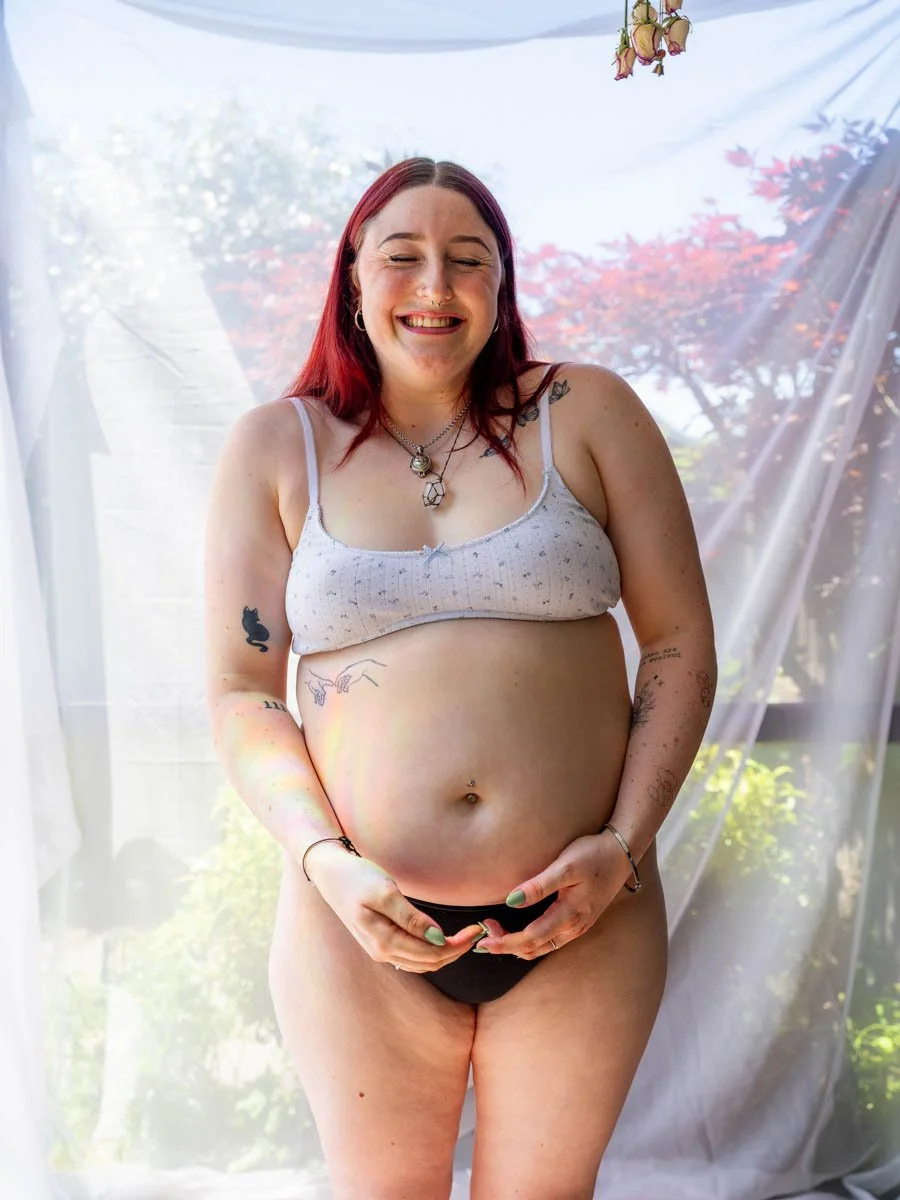
Lilly, 23, Christchurch
Listen to Lilly’s Story
Read Lilly’s Story
When I first started my period at 12, I was always having, like, painful periods and stuff, but never really did anything about it—until I was 16 and moved to Christchurch, and then I started getting on hormones and stuff, and then I would always be like, "But it's really painful, and they're really heavy." But then they, like, put me on that medic—the Tranexic—medication, and then that didn't work.
But then they just kept pumping me full of more hormones. And it was only this year where I started making progress of, like, actually getting stuff done. I had to go to private gynecologist. But it was a massive wait time to get in and see her anyway. And then her referring me to public, and then still four months and waiting, and still don't know where I am on it.
And that's just to get a specialist, pretty much, just to talk about it, and then hopefully get my lap. But yeah, it's been really hard and still no answers—and really long. And like, yeah, just not getting anything back from the system.
It's been 10 years since I've been getting symptoms, and it's only ramped up. It started getting worse when I turned 20—that's when I started getting really bad symptoms. And then it got way worse when I got the IUD in. But my pain has probably been the worst this year.
I had to leave my job at the start of the year. And I had to use all of my annual leave after I used all my sick leave. And then I was like, "I can't do it anymore." 'Cause of how bad it had gotten. And then they were always like, "Lily's sick all the time." Like, "She's always taking sick leave or annual leave because she's sick."
And it's just like, "No, it's not because I'm sick. I'm, I'm... got something." But then they'd always say like, "You gotta be prepared." And I'm like, "I am prepared. I, I have my medication."
They were like, "Let's put an action plan in," because they had to have a meeting with me—because of how much sick leave I was taking. They were like, "Okay, so what's our action plan?" And I was like, "Okay."
And they were like, "Okay, make sure you have your medication with you. Make sure you have your heat pack with you." But then even then, it wouldn't help. Like, I would take all my medication. I would—have my heat pack. And it still wasn't working.
And then they just kept getting mad at me. And then it was just like, I'm trying my best. And I'm still getting turned away.
And I was like, "Oh, could I get a chair?" And they'd said no because they've had people abuse like the chair system before.
'Cause there was one time where I was squatting down in pain and I was pretending I was doing something, but I was in so much pain I couldn't think of anything else except the pain. And then my, my regional manager had looked at me and was like, "Lily, talk to the customer." And then I was like, "No, I can't," 'cause I can't, I couldn't think. And then she was like, "Lily, talk to the customer." And I was like, "I fucking can't. I'm in so much pain right now."
And then it was just really hard because when you're experiencing this pain, you can't think about anything else. Through the pain at all. Like, you, you just can't. Like it's so hard to just pretend to be happy and, like, talk to someone.
It's not just a period. I don't get my period because of the amount of hormones and contraception I'm on, which I don't need, by the way. I, you know, I won't get pregnant. But it's not just a period because I'm not bleeding, and I don't. The only time I do is when I'm in severe pain, and it's not even in my cycle. And then, yes, there are some times when I'm in, like, my ovulation—I will get intense pains—because I'm ovulating.
So that's what I would want people to know.
I would probably just say be kind to yourself. 'Cause in times when you are in pain and stuff, you just feel like, what's the point? And you just need to be kind to yourself and know that you're not alone in the experience of what you're going through. 'Cause a lot of the time it can be very isolating.
And when doctors kind of brush you off, make sure you get your point across. And like, I wouldn't say don't exaggerate, but exaggerate it. Make it a little bit—Yeah... worse than it is. Even though it is really bad anyway. Don't, don't downplay it at all. Make sure they know.
And then if they're still like, "Uh," be like, "Uh." Like, fight them on it. 'Cause a lot of the time if you do downplay it, then they're not gonna do anything at all. And even when you, sometimes when you do, like, actually say how bad it is, they're, they're doubtful sometimes.
But be patient and be kind because it does take a while. Which is annoying and it shouldn't take a while.
And get support network 'cause I feel like I'm very lucky with my partner, and she understands, and I have her, but there will be times where I'm like, "I feel like a bit of a burden 'cause I'm not doing anything." And also, at the same time, it feels like I'm being lazy, but I'm not. I'm not being lazy. It's because my body can't function.
At the end of the day, just be kind to yourself. Make sure you have everything you need.
Oh, and make sure you go everywhere prepared with all of your medication and a hot water bottle or your heating pad—'cause the amount of times I was like, "I'll be fine." And I didn't bring it, and I've been in pain—Yeah... and I've gone, "God, I wish."
So make sure you have your stuff with you 'cause it's awful.