
Mica
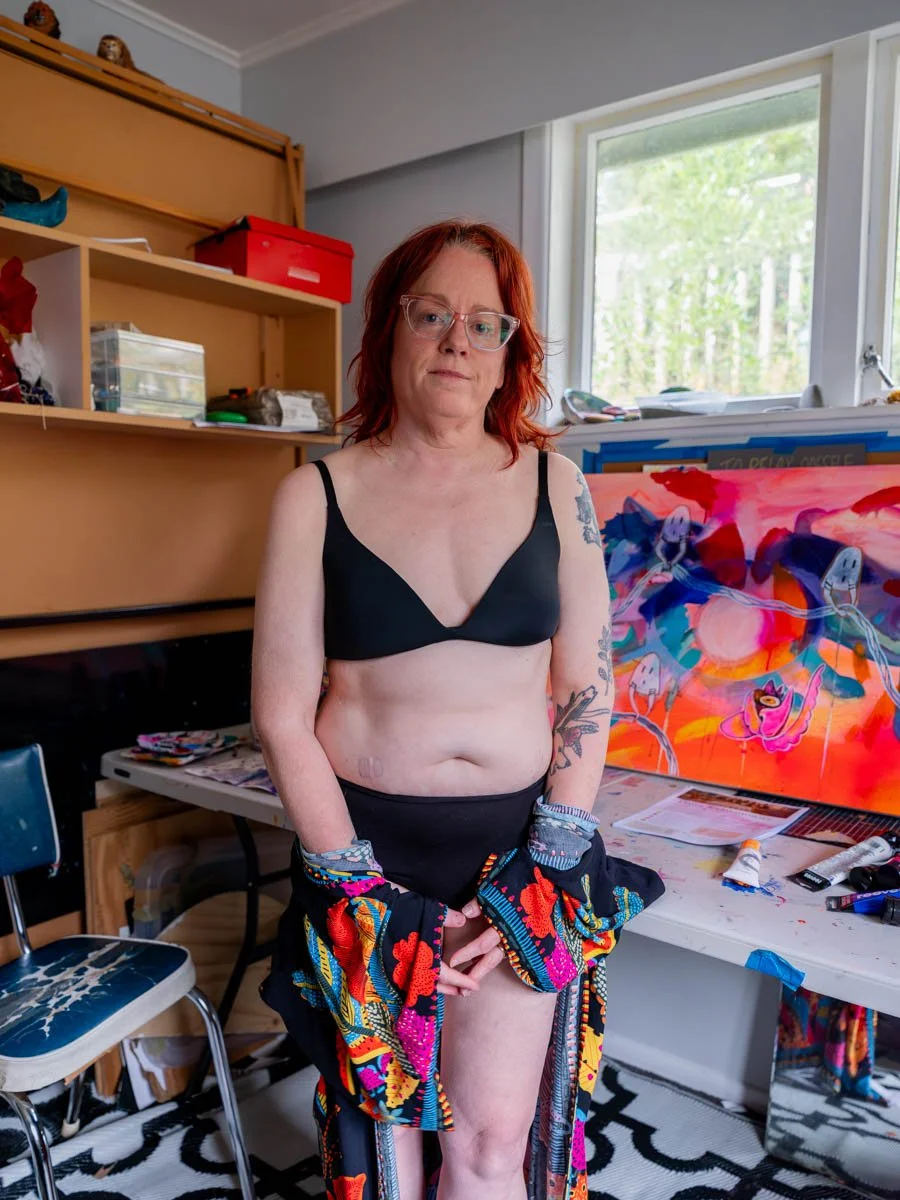
Mica, 51, Wellington
Listen to Mica’s Story Here
Read Mica’s Story
So my journey, I don't know where it began, if that makes sense. But I, I knew something was wrong with me ever since I was a teenager. I had my period when I was 11. But back then, I had a mom that didn't talk about your period. So it was like hidden—so I never really had anyone to tell me what was normal.
And then I immigrated to New Zealand in my tw—early twenties, and I was just like, "Something's going on." But I was constantly told that I was depressed or I had my eating disorder at that time, so I just kept thinking the thing that was going on was my mental health.
And it wasn't till I was really struggling walking, and again, I thought it was my bowels. So again, they thought I was just mental health and, and then they wanted to put me on metformin back then but didn't actually give me a reason why. That wouldn't have helped the endo.
I ended up going to a café on Courtney Place. I, I remember it so vividly and seeing an article in Woman's Weekly from the singer Go-Golden Horse, and it had all the symptoms. I just, I vividly remember it. And I ticked everything. All of a sudden, it made sense that it was probably a systemic situation rather than me being depressed.
I realized I had to go to a private person because I couldn't get a doctor to listen. So I did some research and found he was the best in Wellington, and I was like, "I'm gonna go there." And I brought in all the evidence 'cause I was like, "This person's gonna listen to me." And he was like, "Yeah." Like, "I think you might have it. Let's have the surgery."
And then did the thing where you wake up and you're just like, "Do I have it?" And, yeah, that was the beginning—of a very long journey, and then recognizing I had endo and, and then years of more surgeries. But at least it gave me a point of reference—of what was going on with my body.
I actually, oddly, became more connected to my body—and had more of a voice. I think that's why the eating disorder was real, like, numbing, situation for me. I had bulimia, anorexic combination—and, I think the vomiting kinda took away the pain.
So I look back and I'm like, all of it makes sense. And once I was healed from my first surgery, the lift of internalizing what's wrong with me, it, it went away. And it was really empowering to have the diagnosis.
I had probably the worst pain. Like, then I really, really knew what pain was after giving birth. They just said, "Oh, you'll heal. Your body will heal." I had massive adhesions in my ovaries—and super fatigued, and I felt like vomiting all the time—from the pain.
The doctor explained to my husband, imagine your balls with 100 rubber bands around it, and then do all the housework and do everything, and wonder how you would feel. And my husband is very, he's supportive and loving and empathetic, but he al—also doesn't know.
So yeah, having that surgery was validating—that I wasn't making up. I felt more empowered every single time I went to the doctors like, "No, I know my body. I am telling you something's shifted, and—something's going on." "This is not my normal."
And, I think that's one thing I've talked to people is like, if something changes, then go to the doctor, you know?
I do know a hysterectomy is not a cure. Even though I chose to have one, I wouldn't just go and say, "Have a hysterectomy and you'll be cured." 'Cause that's not... And that's important.
But I think you should have a choice. And you know your own body. We're not stupid. Yeah. And we're not like—dramatic or—who gives a shit about the men in your life who might want to have your baby someday? It's none of their business. If someone's asking for one—then what's the problem?
And also, like, don't get pregnant just because a doctor says, "Get pregnant." It's mentally hard to lose your uterus. Even if you want it. I was surprised—on my own reaction. I knew I probably couldn't have any more children. My body couldn't really handle the one pregnancy I had. Yeah. And then when I did have the—it was a loss.
Whatever feeling you have is gonna be okay. Mm. Like, I sometimes realize that I needed a lot of permission for how I felt—with all of this, if that makes sense.
Be super kind to yourself. Keep a diary for at least three months. Write down your symptoms. Always have someone with you in the doctor's. I would never, ever go to a gynecologist or any doctor anymore without another person. I noticed a huge shift.
Also, don't let a doctor force you to do anything you want. You can go away and come back. I think if you've done your research and you feel confident that you don't need to do those things— But it's hard.
And also, if you don't like your doctor, get a new doctor. The amount of people that stay with a doctor that doesn't believe them—makes me very frustrated. 'Cause then you're never—gonna get the help you need.
I've been knocked down a lot—but I've also, at every surgery, every time, I'm like, "Nope." "I know my body. I know it."
So it's made me stronger, and—Yeah... I'm a better advocate for it.