Jamie
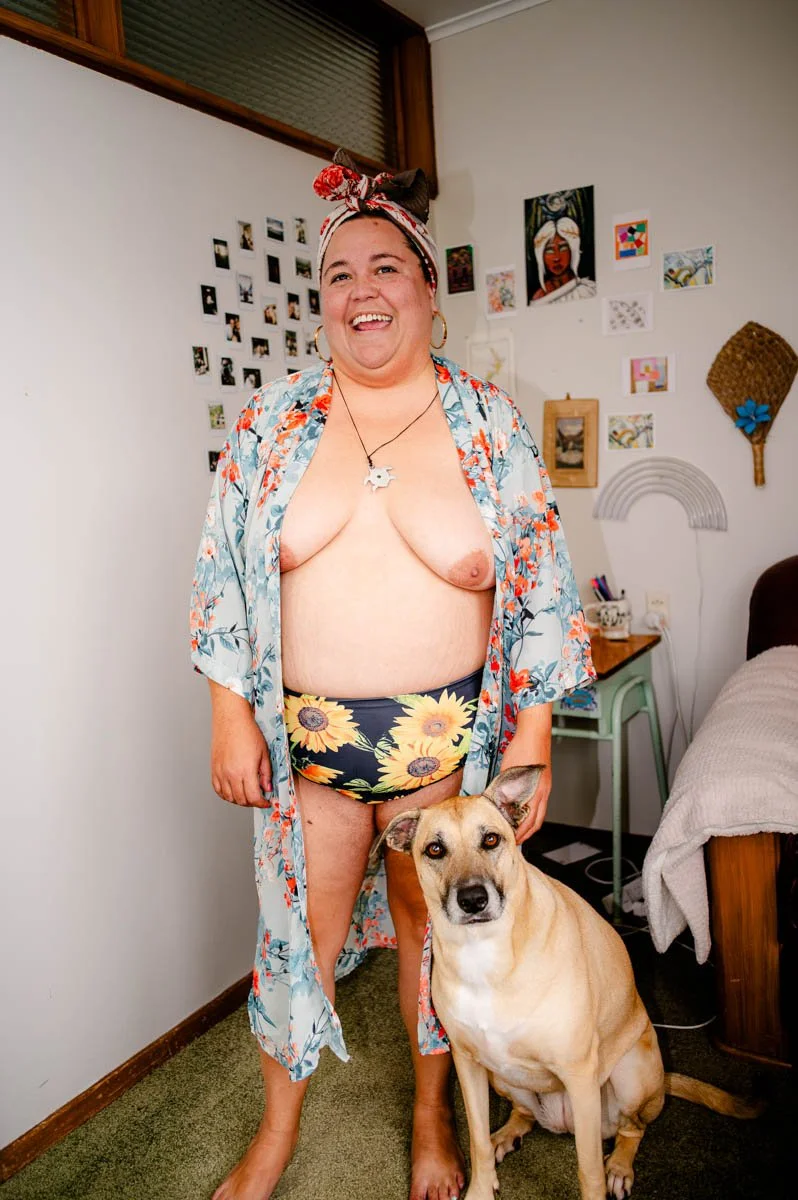
Jamie, 40, Hamilton
Listen to Jamie’s Story here
Read Jamie’s Story Here
I first knew something was up with my periods when I was about 15, and by knew, I think I suspected, but I didn't have the knowledge, the language, or the support around me to think that it was anything totally abnormal. Um, but I just remember I had this period that was kind of the first bloodbath. Literally, it was everywhere. It was like a horror scene out of Carrie, and I would always bleed so heavily, and there was a lot of shame around using super tampons. So, you know, I was just always having to change my tampons, and I was always in pain. Um, but I just kinda thought that this was normal, and that that's what periods were going to be.
It wasn't until I came back to New Zealand after a decade away, uh, because my periods were all over the place, and I was in so much pain, um, and they did an ultrasound, uh, and found out that I had a cyst on one of my ovaries. And so they told me that I had PCOS, which obviously is now known as PMOS. Um, and then because it was COVID times, it took 18 months for me to get the surgery, the laparoscopy that I needed. Uh, it had been canceled so many times, and then I finally got it, and they found out that not only did I have a cyst, but they found, uh, I believe grade 2 endometriosis as well.
And again, I don't know if it was COVID times. I don't know what else was going on. Uh, but that's literally all the information I've ever been given about my endo. Um, I had some cells and, you know, laser surgery for that. Uh, but I've really, from my medical doctors, I have never been given good information about where my endometriosis is. I only know it was grade 2 because I saw the medical paper, and everyone's just kind of left me at that.
I wish that the myth, I wish one endo myth that would just honestly fuck right off is that going on the pill is going to fix it or, um, hormonal treatment's going to fix it, because that has just not been my experience. I've not ever really found any relief from either the pill or of the IUD, and when I've spoken to the last two gynecologists about it, you know, they've basically treated me like I'm just being difficult, um, because they want the easy win, I guess.
And, you know, then the thing that they offer is chemical or physical hysterectomy, and again, that just doesn't feel right. So I guess, yeah, just the myth that birth control and hysterectomies are going to cure endo, is one myth that, yeah, I wish would just disappear.
The advice that I would give anyone who's recently diagnosed or is trying to get a diagnosis is to just honestly find as many, like, online support groups as possible. There are so many out there. Obviously, Now You See Me is an amazing one. Um, but there are so many. Um, Endo Warriors Aotearoa is another amazing one. But I think being able to learn from the community and people who have gone through it before is so helpful.
Knowing what to ask, knowing what terms the doctors might use, what treatments they might offer, what you should know about your endo that your doctors aren't going to tell you. Because it's actually amazing to me how many doctors are so ill-educated, uh, in this space. They really don't know anything. And since your first line of support is often your GP, sometimes you're gonna just have to be more well-versed in this than the people you're meeting, also so you can just advocate for yourself.
I had a GP who I loved to pieces, but his response was, "Oh, you need to get pregnant to fix your endo." And my friend was like, "No, no, no, no." But it was actually meeting other people with endo, um, and finding as much information as I could in these spaces that have really helped me understand what my options actually are, um, and also helped me advocate for myself in these spaces.